 +91 8956049164
  contact@phiedge.co.in


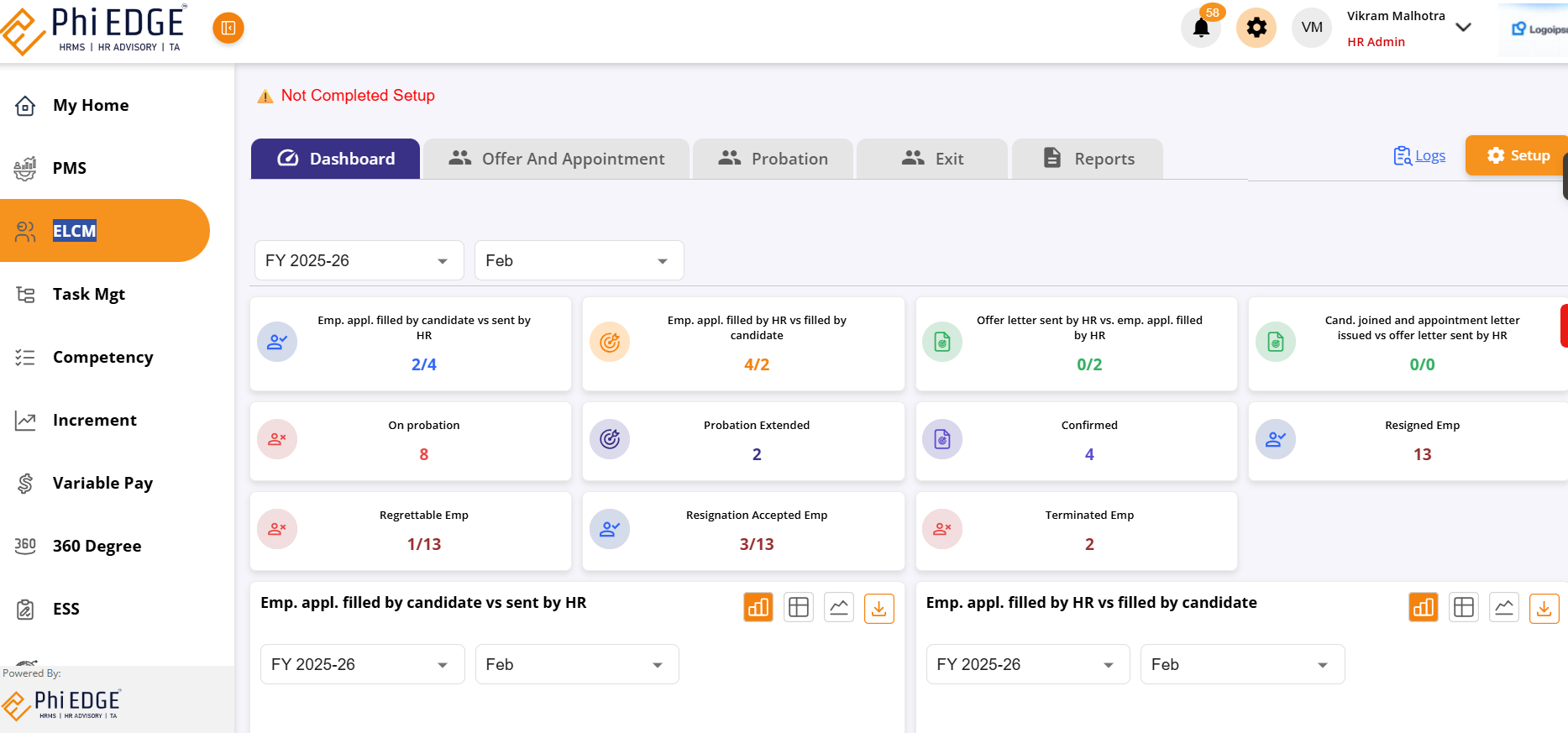
Employee Life Cycle Management
PHI EDGE’s Employee Life Cycle Management (ELCM) module simplifies managing every phase of an employee’s journey—from hiring and onboarding, movements and growth to exit. It ensures streamlined processes, automated workflows, and real-time insights, helping organizations enhance employee experiences while aligning with business objectives.
Key Features of Employee Life Cycle Management:
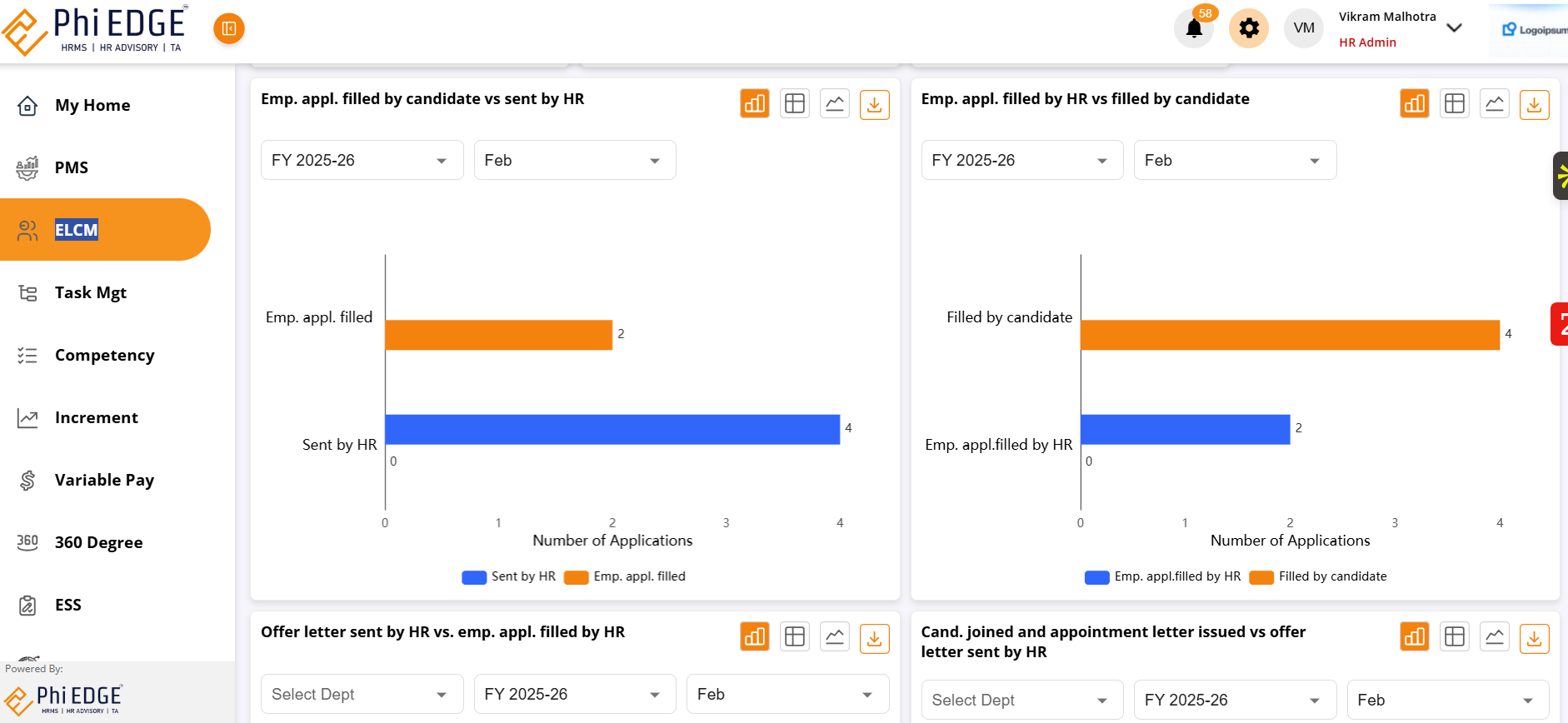
How It Works
Onboarding
- Streamlines the process of integrating new employees with automated workflows for documentation, induction and orientation.
Movement and transfers including growth
- Tracks employee transfers, movement, change in data, growth through a centralized dashboard.
Data Centralization
- Consolidates employee information into a unified system for easy access and secure management across all stages of the employee lifecycle.
Seamless Offboarding
- Automates exit formalities, ensuring compliance and collecting feedback to enhance retention strategies.
Benefits of Employee Life Cycle Management
-
Streamlined Processes
Automates key HR tasks like onboarding, movement/ transfers and offboarding, reducing administrative workload. -
Enhanced Employee Experience
Ensures smooth transitions and personalized growth plans, improving employee satisfaction and retention. -
Data-Driven Insights
Provides actionable analytics on workforce trends, enabling informed decision-making. -
Increased Efficiency
Centralizes employee information and processes, saving time and improving accuracy. -
Compliance Assurance
Helps maintain legal and organizational compliance through automated documentation and record-keeping.
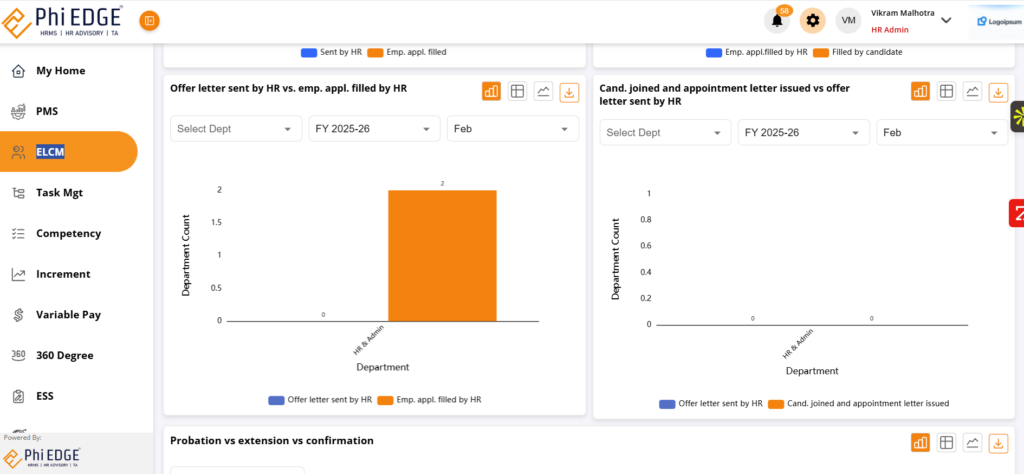
Employee Life Cycle Management (ELCM) helps organizations by:
Streamlining recruitment and onboarding through centralized data and automated workflows.
Enhancing employee engagement and development with structured training, performance tracking, and growth plans.
Enabling data-driven decisions using centralized employee records and analytics.
Ensuring legal compliance and reducing errors through automated documentation and reminders.
Supporting retention and smooth offboarding with proactive engagement strategies and structured exit processes.
Improving interdepartmental collaboration by integrating HR, IT, finance, and operations for seamless employee management.
